Privacy- The Distinct Human Right

Conversation about sharing data a decade ago involved the topic of privacy. The do’s and don’t of the Internet were drilled early in our early stages of experiencing technology, and you’ve guessed it – the number one rule was to avoid sharing personal information with strangers online.

It’s scary now, to think that if a total stranger looked up my name, number or university- were able to get a hold of me and view my location, photos and other personal details. It doesn’t seem so bad, because everybody is on the Internet and has adopted a new norm in the way we interact and converse with each other. Obviously we are subject to having the right to disclose what type of information we put out there, yet still feel the sense of intrusion when knowing data is being misused.

With Facebook’s promise to prioritise privacy after the incident with Cambridge Analytica, users of social platforms have become more careful than ever. It is proof that your personal information is at risk despite the efforts made to reassure it won’t happen again.

As privacy protection is introduced as the foundation of safe browsing, it might also be good to reconsider sharing more intimate and private information in person where it can’t be replicated and shared. Oversharing is becoming an issue in our society yet groups of individuals find it hard to feel safe online.
Don’t embarrass yourself

Digital Marketing is all about optimising reach using creative strategy through digital platforms, but it is so much more to that when we are dealing with companies that represent themselves as a role model to their fellow supporters. It extends to morale, issues surrounding political, environmental and even social issues. Humans are critical creatures and the digital era has maximised the potential for consumers to spotlight and magnify issues by companies, creating this ‘cancel culture’.

Digital marketing extends to morale because it ultimately paints a picture of your company, there is less of promoting products and more of promoting lifestyle.

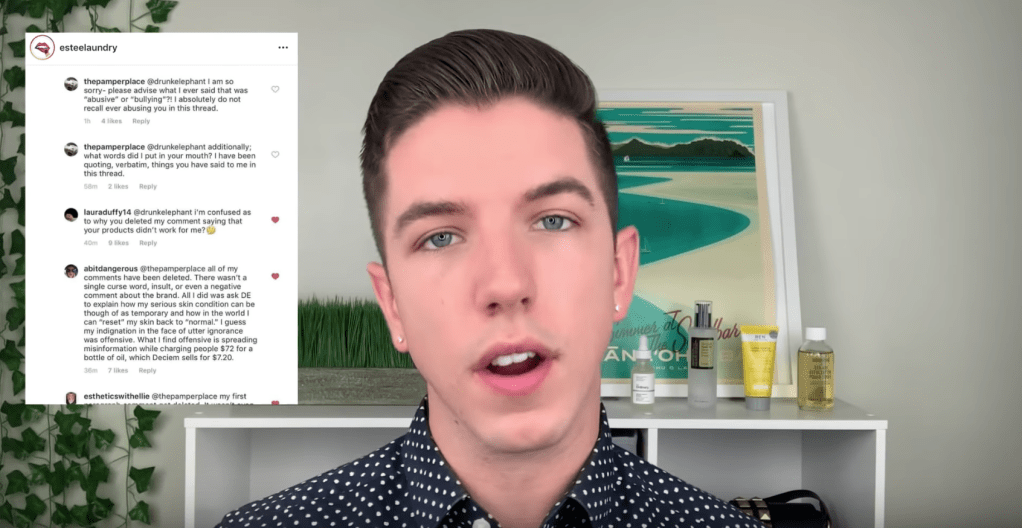
A prime example of lack in morale is the brand Drunk Elephant, a skincare brand retailed in both Sephora and Mecca that target young consumers. Known for its ability to achieve exceeded expectations in skincare and its ethical use of ingredients and packaging. Their brand came under harsh criticism, when confronted with users who commented opposing ideas against the company’s philosophy. They were quick to defend themselves, rather than empathise and come to a resolution to their customer’s enquiries.

How does this tie in to digital marketing? Customer service is in its own shape form and sound, however when it is displayed on media for everyone to see, they are responsible for managing themselves as a professional individual. They are marketing themselves as an ethical and cruelty free brand yet are replying with comments that are inconsistent with what they truly stand for.

When have you ever experienced something similar and do you still shop with them?

What is Solutionism?

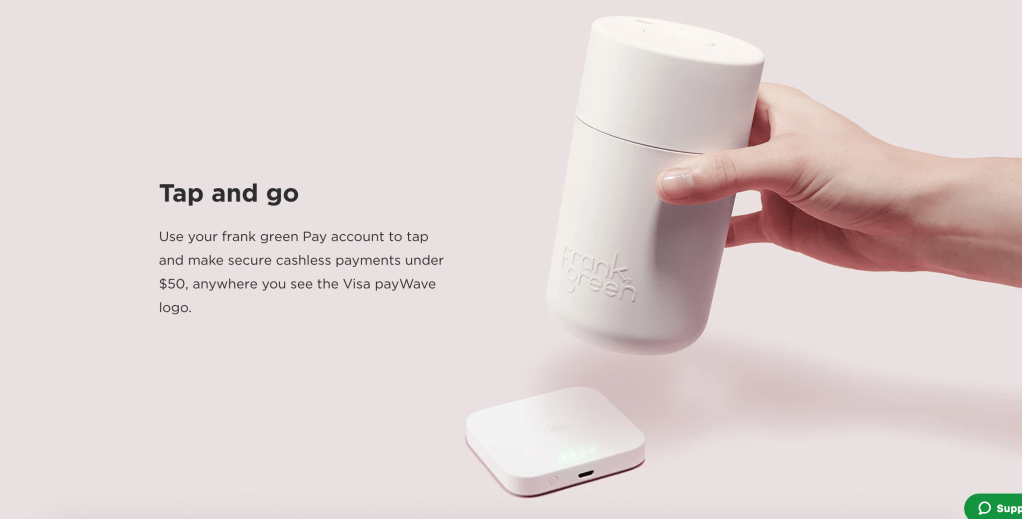
You’ve probably already encountered this or thought about it, but just didn’t know the word to describe it. Solutionism is the “belief that every problem has a solution based in technology” or “providing a solution/s to a customer (sometimes before a problem has been identified”. Need to wake up at 6am? Grab your smartphone and set the alarm. Need to pay for a coffee using your reuse-able coffee cup? Grab the ‘tap and go’ Frank coffee cup! Innovative or just plain wasteful?

As technology grows at a rapid rate, first world countries find more things to create solutions to, in hopes to provide a stress-free life. Whilst we are living a more luxurious life, the other 50% are fighting for clean consumable water. Needless to say, innovations like these are hard to ignore as they drill in the idea that there is a missing element to your perfect life.

Solutionism ties in very well in with artificial intelligence. Although the Frank coffee cup does not require any element of it, it stresses us to think about how far in technology we will go, and when we will stop. Of course, it is important to move forward and avoid being stagnant- to welcome new innovations and equal opportunity to everyone. But when we welcome products that convenient our lives by not pulling your credit card out to pay for your coffee, I believe there would be a problem that questions resourcefulness.

We as a society want to be environmentally friendly yet technologically advanced and it questions my understanding of where technology will take us.

What are your thoughts on new innovations? Where do we as a society need to draw the line and where should we invest in terms of technology?

We are all addicts

If you were to describe Digital Marketing, it would be defined as grabbing attention using digital platforms. There are constantly new and innovative ways that marketers do this, they find their way in to your mailbox and even when you’re socialising with friends online. To aid this, phone devices are designed to be addicting- Vox talks about how bright and colourful icons embedded in layouts intend to keep users hooked.

Apps replicate the process of pulling a slot machine lever, with the pull to refresh feature. That’s a conscious design choice where apps are continually updating new content but the pull action provides an addicting illusion of control over that process. Just like a slot machine, we are hooked to the uncertainty and will continue to scroll for longer looking for new information that keeps us stimulated.

Vox talks about eliminating non-human notifications, which means to turn off notifications that aren’t induced by a person. This forces to question- when will phone users finally realise how saturated marketing affect their lives and when will they learn to ignore marketing messages?

It’s really refreshing to hear that there is more awareness around addiction to social media as finding ways to prevent or fix habits help tremendously. By being selective to content, marketers are forced to be more strategic with their marketing tactics.

What are your thoughts on this? Do marketers have a responsibility for user’s addiction or should we blame the design of mobile phones?

Attention spans aren’t shrinking, they’re evolving

The 2018 State of Attention Report, has revealed a number of key findings that will help marketers boost their ability to cut through distractions and engage with modern audiences. The findings are:

People are becoming more selective – 42% are more selective on the content they consume compared to a year ago

They key to engaging content is compelling story and visuals – 85% said a strong narrative is critical in maintaining audience engagement while 73% said the use of animated visuals is effective in keeping the audience engaged.

Nearly 9 in 10 respondents said a strong narrative or the story behind what’s being presented is critical in maintaining their engagement of their audience. There are so many implications for digital marketers and how an advertisement speaks measures when communicated in a visual manner. It is hard to dispute the face that striking or narrative advertisements are far more likely to be remembered. A prime example is the ‘a big ad’ by Carlton Draught that uses imagery and narrative that has captured audiences’ attention for over 9 years.

Carlotn Draught Ad

There are now 2.4 billion Millenials in the world according to the UN population division, making up a third of the global population. This means they are the most important group to cater to when seeking the attention of business audiences.

It has been found that there more Millenials (80%) than Gen Xers (68%) or Boomers (59%) shifted their focus away from the speaker during the most recent presentation or sales pitch they saw live.

The consequences of this is inevitably the shift to using more digital platforms where there are a myriad of designs curated for pleasure and that are easy on the eye. There needs to be newer ways to adapt to the attention span on Millenials as they are the future.

What do you think about this? Is your attention span decreasing as years go by? Can you read a book without getting distracted now?

Humans vs Technology

The emergence of the digital era has tremendously impacted every aspect of our lives and stimulated more job opportunities throughout the digital sector. Areas like UX/UI, website and app design have exploded over the past decade, especially in the last 5 years due to the demand and increase of numbers in mobile users. Our society is becoming dependent on mobile tools and marketing is rapidly adapting to meet these needs. Digital marketing is becoming increasingly intelligent in the way it interacts with consumers, it almost creates an artificial yet personable experience for users.

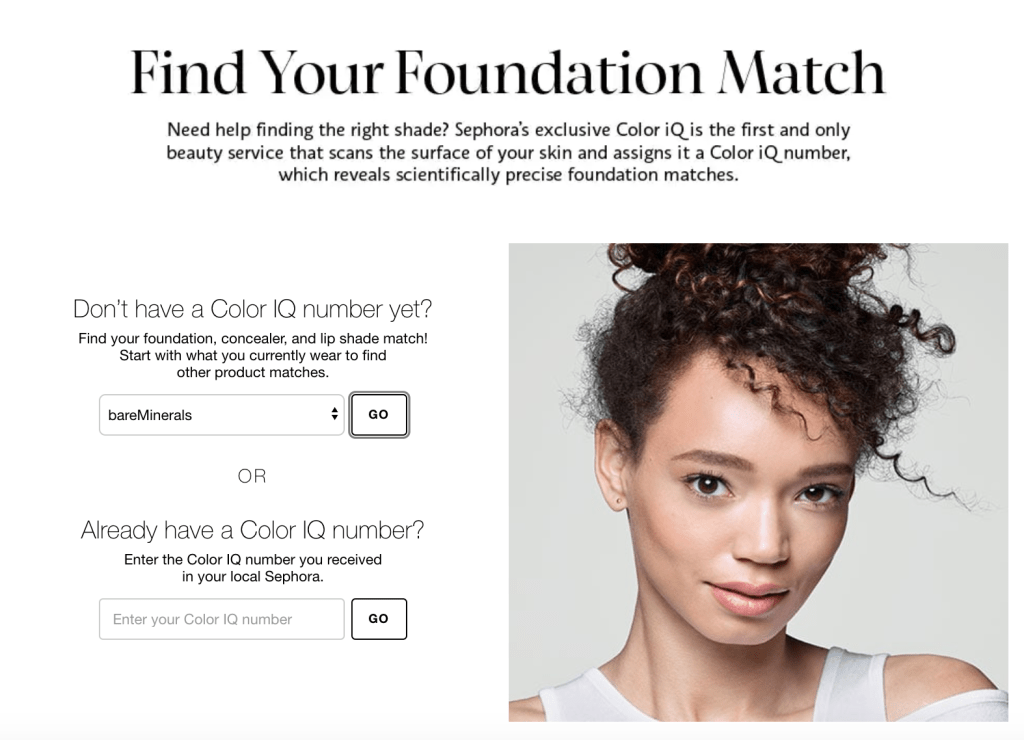
An example of technology replacing customer service was first seen on the Sephora website, where customers are able to narrow down their shade of foundation by filtering out the brands they use and their colour references. Sephora then is able to determine a product of theirs that uses algorithms to match their products in hopes to suggest something that deliver the same result, if not better.

Sephora

Interaction between customers and technology are almost effective but not as personable and tailored. Human interaction is what maintains relationships and creates a more service-centric approach. Digital marketers hopefully could learn from the impact of face-to-face interactions and replicate their digital marketing strategies into a more humane approach and eliminate robotic or automatic strategies such as sending emails to all subscribers.

What do you think about online services and what are the gaps between visiting sales advisors in store, as opposed to an online service consultant?

Addicted to Attention

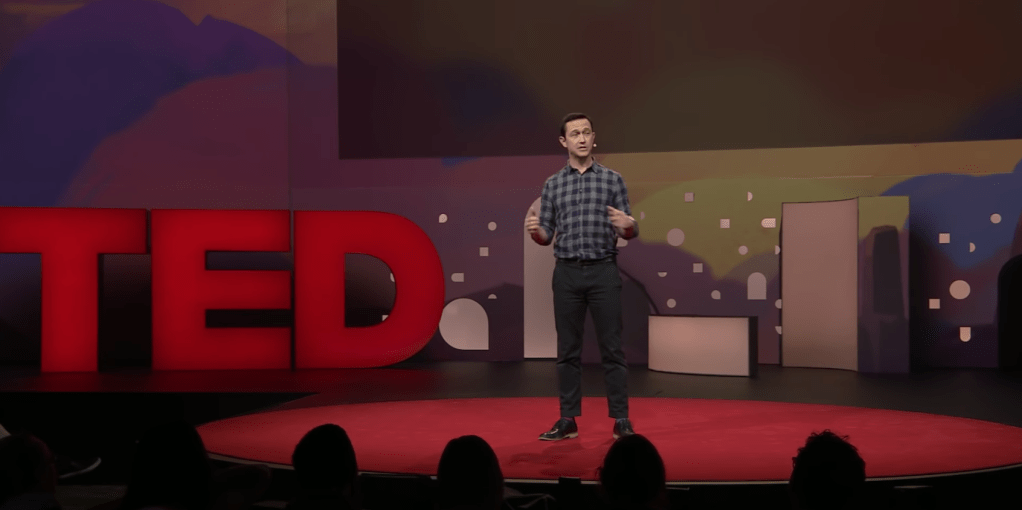
TED Talk by Joseph Gordon Levitt stresses that creating content for attention makes us less creative. His story is interesting, as an actor he has never felt satisfied with the number of followers on Twitter or Instagram, instead, feels quite the opposite.

We as millennials post content on social media, to get attention, and as a result draw attention to ourselves to ultimately receive more numbers of followers.

TED Talk

Levitt states that “if your creativity is driven by the desire to get attention, you will never be creatively fulfilled”. Though he is directly referring to one’s self, there are many parallels to companies that advertise themselves online, and gain mass attention from the globe. The implication of gaining so much attention, is that they will continuously have to remodel themselves to maintain attention and innovation.

Creativity is a practised skill and does not come naturally, thinking out of the box will continuously challenge companies as new innovations are constantly saturating the market. What are your thoughts on how attention is made on social media? To what extent do you think we have gone too far?

The Great Hack

Remember when Mark Zuckerberg was interrogated by 44 senators?

Image result for mark zuckerberg interrogated

Believe it or not but there was a lot of relevancy with digital marketing. Long story short, it was a major political scandal in early 2018, when it was revealed that Cambridge Analytica, a data marketing firm had harvested personal data of millions of people’s Facebook profile without their consent and used it for political advertising purposes. The company says it “uses data to change audience behaviour”.

Christopher Wylie, a former employee had only recently come forward to expose its practices. It was revealed that Cambridge Analytica was using Facebook data to stream a population of approximately 100,000 individuals that allowed them to access their friend’s and family’s data, eventually having access to the majority of America’s population.

Cambridge Analytica took that data and identified target voter groups, and designed targeted messaging to influence opinion. They knew what kinds of messaging you would be susceptible to, and where you’re going to consume that, and how many times they need to touch you with that information, in order to change how you think about something. It was a political propaganda that helped Donald Trump win the US presidency.

It is hard to swallow the reality that consumers are so willing to give information about themselves, especially when signing up for membership with retailers. Although you can’t expect that data would be used improperly against you in the near future, it should be taken with due diligence when posting personal information about yourself on the Internet. How much of yourself have you sold online? What implications did it have?

How Kylie turned herself into a billionaire

Besides Kylie’s wealthy background and fame, there is one thing to admire her for. It’s not for her luxurious aesthetic and peaceful persona, but her ability to turn into a billionaire using no paid advertisement campaigns, but predominantly her own social platform.

Whilst there is harsh criticism to note, such that she was born into fame and was not entirely self-made, Kylie still played her cards right. In December 2017, at 20 years of age, she reached 100 million followers on Instagram alone. With debate over her lip filler scandal, she then strategically injected her own lip kit line into the cosmetics industry selling out within seconds.

Source: What can Kylie Jenner teach brands about content marketing?
Read more at https://www.adnews.com.au/news/what-can-kylie-jenner-teach-brands-about-content-marketing#oGqBzDPYEOLqrhrR.99Source:

Kylie achieved this by nurturing a tribe of fans, taken them on a journey, given them value, originality and authenticity and it has paid off, with them believing in her and her products. Why her business became a runway success was because she used something called ‘content marketing’ , it involves sharing a little bit of information about yourself and your company- she didn’t reveal she had lip fillers until later on, giving her audience a story to hang on to. She didn’t reveal too much but kept everyone engaged and wanting more.

Evidently, there is a myriad of factors that helped Kylie to get where she is and there is much stigma around her title of ‘self-made billionaire’. It is however, crucial to focus on her marketing strategies as it teaches many firms about building personable connections and brand imaging.

What do you think about Kylie and her marketing strategies? Do businesses have alternatives to Instagram for image branding?

The first thing that comes to mind

Nice seeing you here, if you’re reading this I’d assume you are also someone taking the 9.30 am class for Digital Marketing MKF3881., how fascinating it is to experience this unit with full relevancy-impacting our day to day lives. This unit has almost doubled in students in the last couple of years because of technology and its capacity to impact and essentially mould the way business and individuals interact with each other. The intersection between socialisation and businesses is prevalent on this one app we all know and use- Instagram.

I did not take this class to understand how Instagram models make money off those diarrhoea inducing teas, but to grasp an idea of how impactful media is on buyer behaviour. Undoubtedly, my purchasing patterns have become more regular and I am convinced digital marketing plays a critical role. Business entities now have the ability to penetrate the market and enlarge business models, as a result, giving people the illusion they are paying less by paying later e.g., Afterpay and Netflix subscriptions.

With the help of technology, digital marketing has evolved into something more than just the advertisements on your screen, impacting every aspect of our lives.